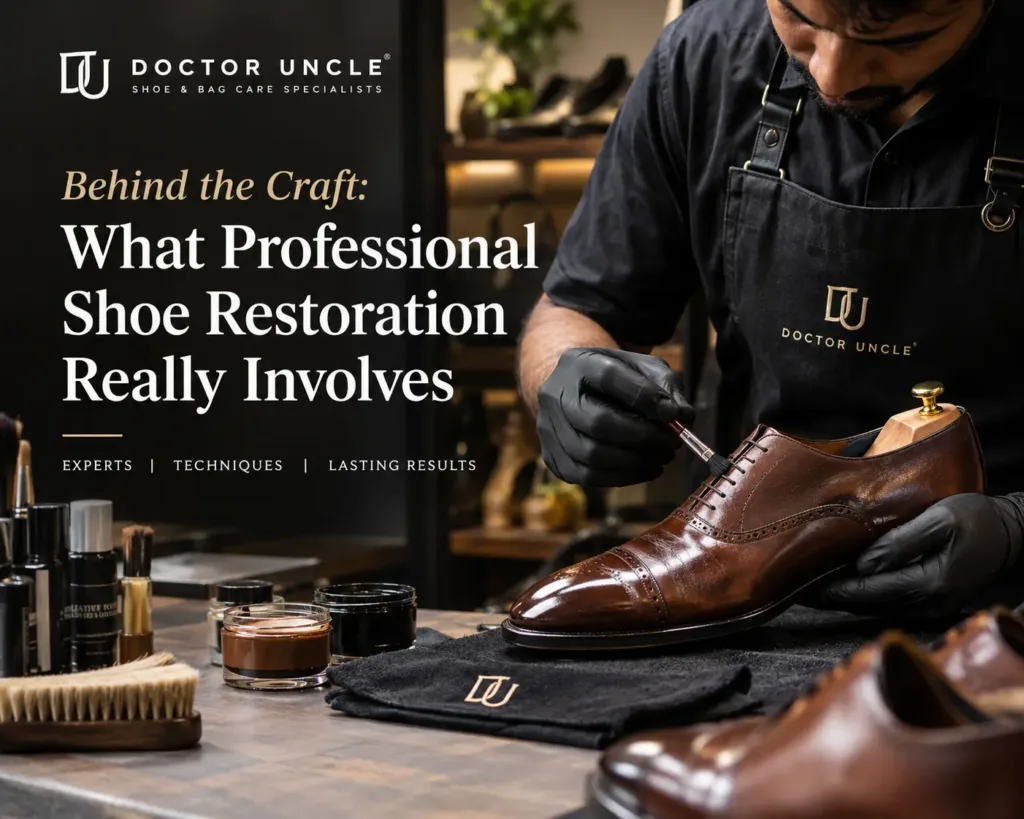
A luxury shoe or handbag is not a single material. A Gucci loafer may combine smooth leather, lining, stitching, metal hardware, and a layered sole. A Dior sneaker can include leather, mesh, printed panels, foam, rubber, and bonded details. A Louis Vuitton piece may use coated canvas alongside natural leather trim. Treating all of these surfaces with the same cleaner is not care; it is a gamble.
That is why professional shoe restoration begins with diagnosis, not product selection. The aim is to improve appearance and function while preserving the item’s original character. A reputable specialist will also explain what cannot be reversed. Scratches can often be softened, colour can sometimes be rebuilt, and worn soles can be replaced, but age, staining, material loss, and previous repairs may limit the final result.

1. The first stage is an assessment, not a wash

Before touching the item, a restorer should identify the materials, construction, finish, and extent of damage. This includes checking whether leather is coated, aniline, patent, suede, or nubuck; whether a sneaker’s colour is painted or embedded in the material; and whether a handbag’s canvas, trim, lining, and hardware need different treatments.
The specialist also records scuffs, stains, cracking, loose stitching, sole separation, deformation, colour transfer, odour, and signs of earlier DIY products. This condition map helps separate safe cosmetic work from repairs that could alter texture, sheen, or colour. It also creates a realistic scope of work and makes the quotation easier to understand.
This conservative approach aligns with official brand guidance. Gucci advises wiping bags with a soft, dry cloth after use and avoiding direct light, heat, humidity, rain, and rough surfaces. The brand also directs owners of delicate canvas, velvet, and suede to seek more detailed advice rather than improvise.

2. Cleaning is controlled and material-specific

Professional cleaning is usually localised. A restorer tests an inconspicuous area first, then selects the least aggressive method that can address the problem. Smooth leather may tolerate carefully controlled surface cleaning, while suede and nubuck require a different approach to avoid flattening the nap. Mesh, satin, coated canvas, rubber, metallic leather, and printed panels each present separate risks.
Water is not automatically harmless. Excess moisture can spread dyes, mark untreated leather, loosen adhesives, distort shape, or create tide lines. Heat is equally dangerous because radiators, hairdryers, and hot car interiors can dry or deform components. Louis Vuitton’s guidance recommends blotting water immediately with a light-coloured, lint-free cloth and avoiding chemicals, oils, mink oil, saddle soap, and commercial treatments on many leather types.
For that reason, a professional does not promise that every stain will disappear. The practical goal may be reduction, blending, stabilisation, or preventing further spread. On luxury items, controlled improvement is often safer than aggressive perfectionism.

3. Recolouring requires matching, layering, and restraint

When leather has lost pigment or developed deep scuffs, restoration may involve colour matching and the application of thin, flexible layers. The restorer considers the original undertone, surface sheen, grain, edge finish, and how the item will flex during wear. A colour that looks correct under workshop lighting may appear wrong in daylight, so experienced work includes visual checks under different conditions.
Recolouring is not the same as painting over damage. If the surface is cracked, greasy, peeling, or contaminated with an incompatible product, the underlying issue must be addressed first. Otherwise, the new finish may sit unevenly, crack at flex points, transfer onto clothing, or make the repaired area more obvious.
The same principle applies to designer sneakers and handbags. Printed graphics, monograms, embroidery, patent finishes, and contrasting trims should not be casually covered. The objective is to preserve recognisable details, not create a uniform new surface that erases them.

4. Structural work restores wearability

Cosmetic work is only part of the craft. Depending on the item, restoration may include replacing worn heel lifts, rebuilding or replacing soles, repairing stitching, reattaching loose components, reinforcing weakened seams, cleaning or replacing linings, reshaping collapsed uppers, and treating edge paint.
A handbag may need internal support to recover its silhouette, while a sneaker may need careful adhesive repair around a separated sole. High-end footwear also requires attention to balance: a repair that changes sole thickness or heel height can affect comfort and gait. Hardware must be protected from abrasion and chemicals throughout the process.
For stored leather objects, conservation guidance stresses support and padding around folds and creases because misshapen leather can be difficult to reshape and may crack when stressed. In a wearable restoration, that translates into careful reshaping rather than forcing a rigid item back into form.

5. Drying, finishing, and quality control matter

After cleaning or repair, the item must dry gradually in a stable environment. It is then reshaped, conditioned only where appropriate for that specific material and finish, and checked for uneven colour, residue, loose components, odour, transfer, and surface texture. A final inspection should examine high-friction areas such as toes, heels, corners, handles, straps, and soles.
This is also where brand-specific caution matters. Gucci recommends keeping leather away from direct heat and humidity, while Louis Vuitton advises storing certain leather goods in their protective felt pouch and away from damp environments. Conservation research similarly warns that oils and dressings can darken leather, attract dust, stain adjacent materials, oxidise over time, and contribute to later stiffening.

What should you never do at home?

Do not machine-wash a luxury sneaker without confirming that every component can tolerate immersion and agitation. Do not use alcohol, perfume, hand sanitiser, bleach, household detergent, or an internet “miracle” remedy on an untested surface. Do not dry wet leather with direct heat, and do not scrub suede until the nap is permanently damaged. If the item has exotic skin, metallic details, heavy colour transfer, peeling finish, structural distortion, or sentimental value, seek an assessment before attempting treatment.
Professional restoration is ultimately a risk-management exercise. The best result is not necessarily the most dramatic one; it is the strongest improvement that respects the material, construction, original finish, and future use of the piece. Whether you own Gucci shoes, Dior sneakers, a Louis Vuitton handbag, or another investment item, begin with photographs, a clear description of the damage, and an honest condition assessment. That is the foundation of a restoration you can trust.

Frequently asked questions

It can be, particularly when the item has high retail or sentimental value, uses delicate materials, or needs structural work. A condition assessment should balance the likely result, cost, and risk before work begins.

A specialist can often improve stains, scuffs, yellowing, colour loss, and sole wear, but no ethical restorer should guarantee an identical-to-new result. Previous treatments and material loss affect what is possible.

Not automatically. Brand guidance varies by material, and Louis Vuitton specifically warns against several oils, cleaners, and chemical products. Test-free home application can darken, stain, or damage a finish; ask for material-specific advice first.

Send clear photographs of the front, back, sides, soles, interior, labels, hardware, and every damaged area. Mention the material if known, how the damage occurred, prior products used, and whether the item is needed by a particular date.

Restoration does not establish authenticity. A specialist should avoid altering serial details, logos, date codes, monograms, or original construction and should disclose any replacement or reconstructed component.