

Table of Contents
What Is Leather Shoe Restoration?
Why Fine Leather Footwear Needs Specialised Care
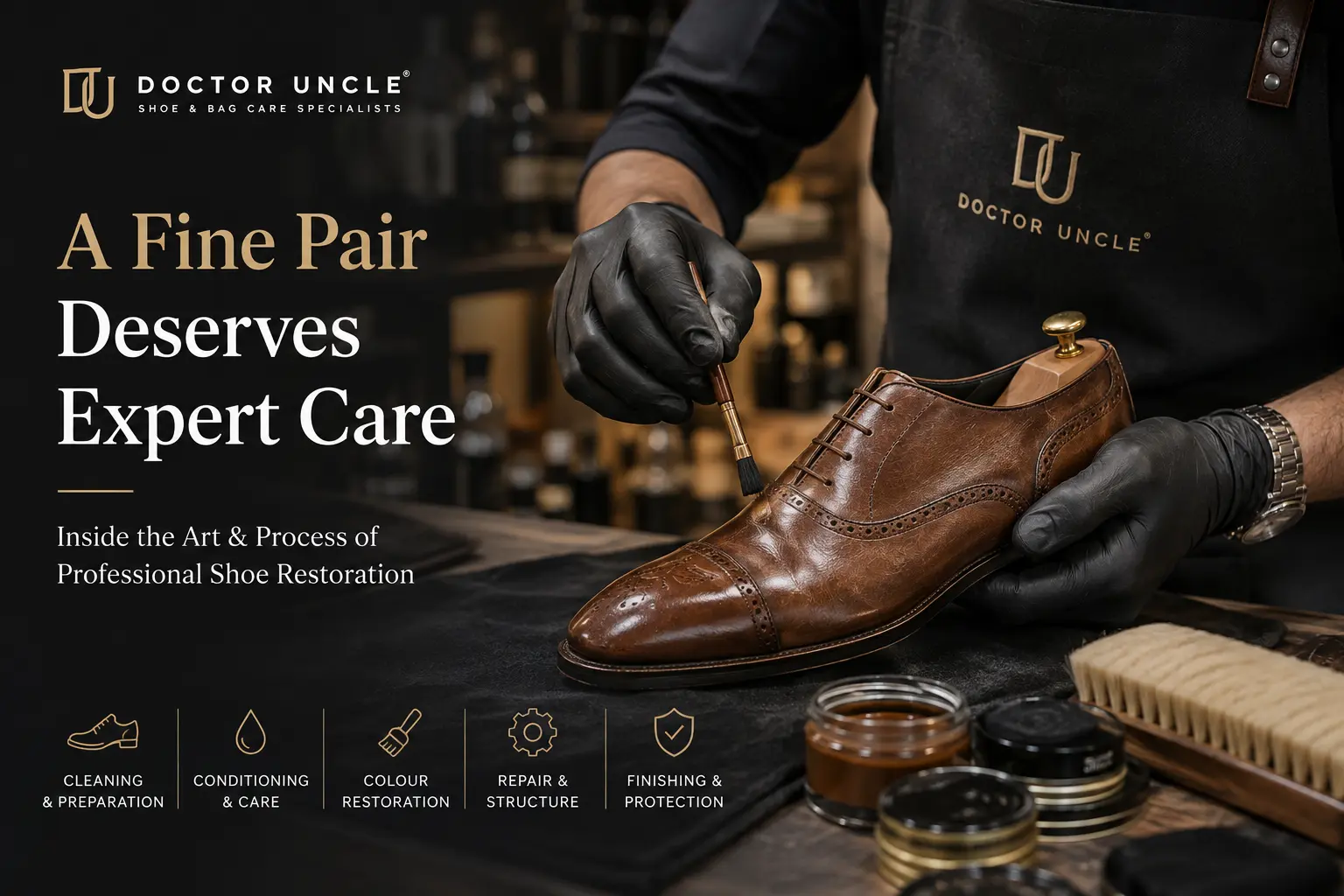
The Main Stages of Professional Leather Footwear Restoration
1. Inspection and material identification
2. Controlled cleaning
3. Conditioning and moisture balance
4. Colour correction and recolouring
5. Sole, heel, and structural repair
6. Finishing and final inspection
How Different Materials Should Be Treated
Material
Key characteristics
Restoration considerations
Full-grain leather
Calfskin
Naturally expressive surface with visible grain and patina
Fine, smooth, and often more delicate in appearance
Soft, napped surface that creates its characteristic texture
Fine sanded surface with a short nap
Use controlled cleaning and conditioning; preserve the original grain and finish rather than applying heavy coverage.
Avoid aggressive abrasion and excessive moisture; colour correction should be subtle and even.
Use material-specific brushing and cleaning; do not treat it like smooth leather.
Requires careful stain and nap management; harsh products can create permanent dark patches.
Protect the surface from scratching, clouding, and incompatible solvents.
Treatment should account for the pattern, finish, and sensitivity of the specific leather.
Test first; leather products may not behave predictably on synthetic uppers.
Professional Restoration vs DIY Care
Common Leather Shoe Restoration Mistakes
How to Care for Restored Leather Shoes
Choosing a Leather Restoration Service
Frequently Asked Questions
No. The outcome depends on the type and depth of damage, the condition of the leather, the original finish, and any previous treatments. Surface dirt, mild fading, and limited scuffing may respond well, while severe cracking, tears, chemical damage, or missing material may remain partly visible. A professional assessment is the best way to understand the likely result.
When the construction and upper remain sound, restoration can extend a shoe’s useful life and preserve its original design. It may also be preferable for discontinued, sentimental, designer, or well-made footwear. Replacement may be more sensible when the structure is extensively compromised or repair would not be proportionate to the shoe’s value.
No. Suede has a napped surface and should not generally be treated like smooth leather. Regular polish can flatten the nap, create uneven darkening, or leave a difficult-to-remove coating. Use products and techniques intended specifically for suede, and consult a specialist for significant stains or water marks.
Polishing primarily enhances shine, tone, and surface appearance. Recolouring addresses more substantial fading, abrasions, or loss of pigment and requires controlled colour matching and application. Recolouring is a restoration process, not simply a heavier version of polishing, and it should account for the shoe’s finish and construction.
Some stains can be reduced or removed, but no responsible restorer should promise a perfect result before inspecting the footwear. The stain’s composition, age, depth, material, and any previous cleaning attempts all matter. Aggressive home treatment can make the mark more permanent, so heavily stained luxury footwear should be assessed before further products are applied.
There is no universal schedule. Frequency depends on how often the shoes are worn, the climate, storage conditions, material, and the type of use. Regular at-home maintenance and prompt attention to early wear can reduce the need for major restoration. A professional visit is appropriate when cleaning no longer improves the appearance or when structural wear becomes noticeable.
Doctor Uncle serves customers in Delhi, Gurgaon, Noida, and the wider NCR region, with Pan India pickup and delivery available for relevant services. Customers can contact the team for an assessment of leather footwear, sneakers, handbags, and other luxury accessories.