

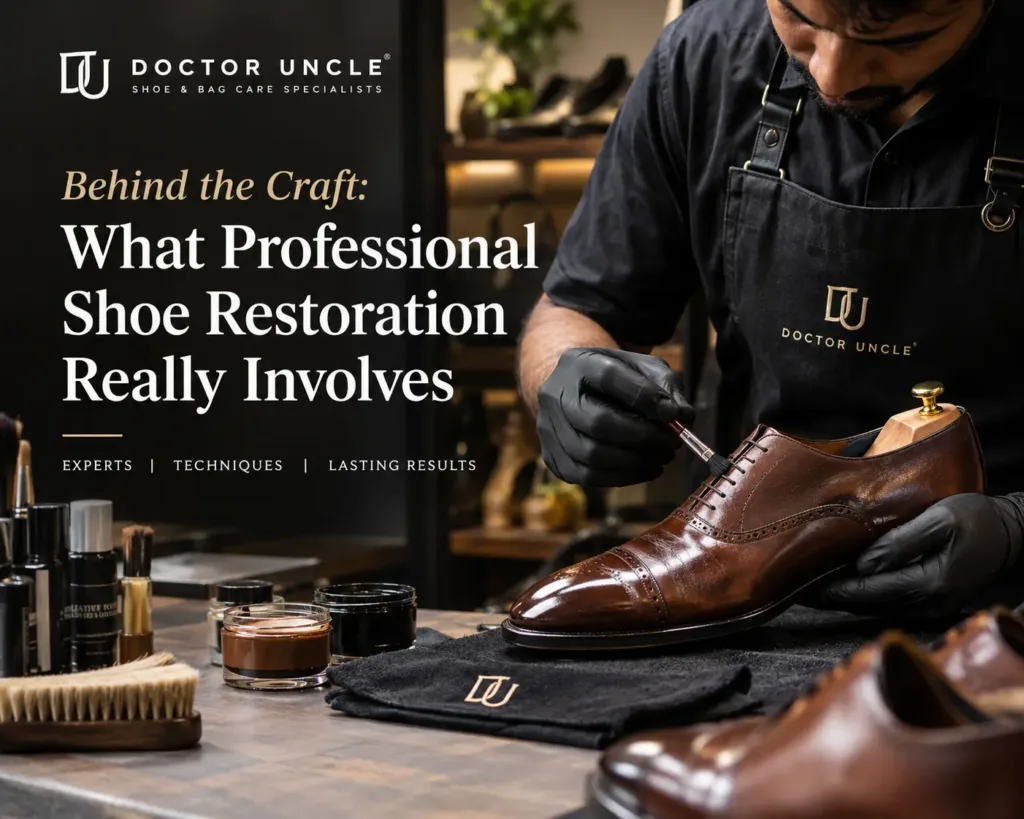
1. The first stage is an assessment, not a wash
2. Cleaning is controlled and material-specific
3. Recolouring requires matching, layering, and restraint
4. Structural work restores wearability
5. Drying, finishing, and quality control matter
What should you never do at home?
Frequently asked questions
It can be, particularly when the item has high retail or sentimental value, uses delicate materials, or needs structural work. A condition assessment should balance the likely result, cost, and risk before work begins.
A specialist can often improve stains, scuffs, yellowing, colour loss, and sole wear, but no ethical restorer should guarantee an identical-to-new result. Previous treatments and material loss affect what is possible.
Not automatically. Brand guidance varies by material, and Louis Vuitton specifically warns against several oils, cleaners, and chemical products. Test-free home application can darken, stain, or damage a finish; ask for material-specific advice first.
Send clear photographs of the front, back, sides, soles, interior, labels, hardware, and every damaged area. Mention the material if known, how the damage occurred, prior products used, and whether the item is needed by a particular date.
Restoration does not establish authenticity. A specialist should avoid altering serial details, logos, date codes, monograms, or original construction and should disclose any replacement or reconstructed component.